
Blog
VIB Lures and Lipless Crankbaits: The Complete Guide for Bass and Predator Fishing
2026-09-21 | GD Angling Tackle
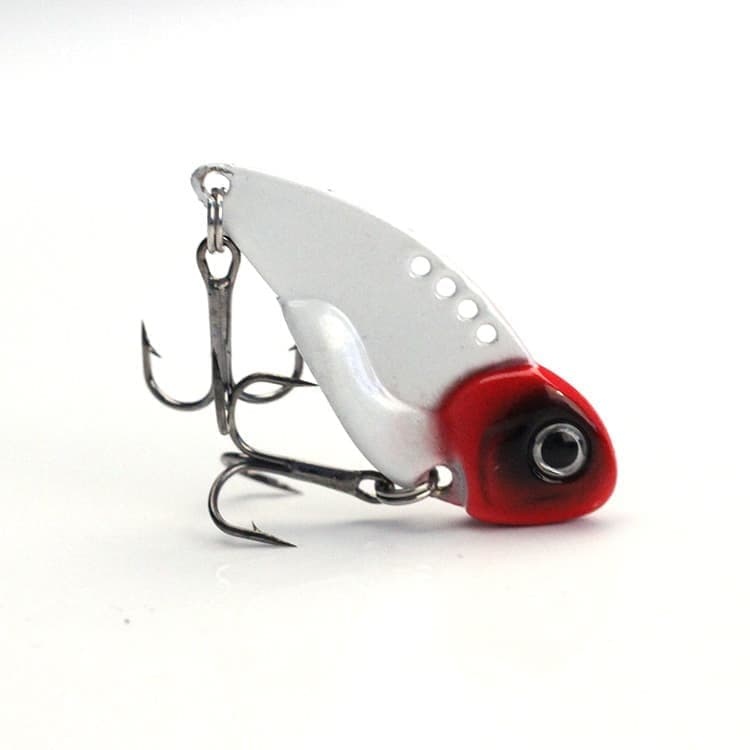 Every lure box has one bait that only comes out when the fishing gets hard. For a lot of anglers, that bait is a VIB — a lipless vibration lure that sinks fast, rattles loud, and keeps vibrating even while it is falling. When bass are pinned to the bottom in cold water, when pike are sulking along a deep weed edge, or when every slow presentation has been ignored, a VIB is often what turns a slow day around.
This guide covers how VIB lures and lipless crankbaits actually work, how to match weight and depth to the water in front of you, the retrieves that catch fish, and what brand owners should check when they order vibration baits from a factory.
What Exactly Is a VIB Lure?
VIB is short for vibration. A VIB lure is a hard bait with no diving lip. Instead of being pulled down by a lip, it relies on its own weight to sink, and on its body shape to produce a tight, high-frequency wobble as it moves and falls.
The family includes everything from a 37 mm metal blade bait to a 85 mm rattle bait sized for saltwater. Whatever the shape, four things are almost always true:
- No lip — it sinks rather than dives, and it sinks nose-down
- Weight-forward or weight-transfer body — long casts, fast drop through the water column
- High-frequency vibration — the wobble is tighter and faster than a crankbait’s
- Rattle in most models — loose steel or tungsten balls that knock against the chamber walls
That combination — fast sink plus constant vibration — is the whole point. A VIB is always doing something, even when you are not winding the handle.
Why Fish Respond to Vibration
Fish do not have to see a VIB to find it. Their lateral line — a row of pressure-sensitive cells running down each flank — detects low-frequency vibration and pressure waves in the water. A lipless bait throws off exactly that kind of signal: a steady, low rumble when it falls, and a rapid buzz when it is ripped forward.
This is why vibration baits outperform visual lures in several specific situations:
- Stained water — where sight feeding drops off but vibration carries for metres
- Deep water — where light fades and fish hunt by feel
- Cold water — when a fast, reaction-style trigger beats a slow, finesse one
- After dark and under ice — conditions where vibration is the only reliable cue
The falling phase is the most important part. Many strikes come on the drop, not on the retrieve — which is why you should always stay in contact with your line and be ready to set the hook the moment the rod tip loads up.
The Main Types of VIB and Lipless Baits
1. Metal VIB (Blade Bait)
A slim, dense metal body with a line tie on top and one or two treble hooks. Metal VIBs sink quickly, hold a near-vertical fall, and produce a subtle, flickering flash. They are the standard choice for vertical jigging, deep structure, and saltwater work where you need to reach fish in a current. Our own Metal VIB range runs from compact 37 mm bodies up to 85 mm saltwater profiles.
2. Plastic Lipless Crankbait
The classic rattle bait. A hollow ABS body, a loud rattle chamber, weight-transfer balls, and two trebles. Plastic lipless baits sink more slowly than metal ones and cast like bullets, which makes them the best all-round option for banks and shallow flats. They are also the easiest type to customise — large surface area, easy paint masking, and plenty of room for a wide colour program.
3. Vertical and Slow-Pitch Profiles
Heavier, narrower lures designed to be fished almost straight up and down from a boat. The body is balanced so the lure flutters on the fall and then snaps back into a tight vibration on the lift. They dominate in deep water, strong current, and for offshore species such as tuna and amberjack.
| Type | Material | Sink Rate | Best For |
|---|---|---|---|
| Metal VIB / blade bait | Zinc alloy or lead | Fast | Deep water, vertical jigging, saltwater |
| Plastic lipless crankbait | ABS hard plastic | Medium | Shallow flats, banks, grass edges |
| Slow-pitch / vertical VIB | Zinc alloy or lead | Controlled flutter | Boat fishing, current, offshore |
Matching VIB Weight to Depth and Conditions
Weight is the decision that matters most, and it is the one most anglers get wrong. If you are not ticking the bottom — or the top of the weed — you are fishing above the fish.
| Weight | Working Depth | Typical Use |
|---|---|---|
| 5–7 g | 0–1.5 m | Shallow flats, pressured fish, finesse |
| 7–12 g | 1.5–4 m | The all-round weight for most lakes and rivers |
| 12–16 g | 4–8 m | Deep structure, wind, mild current |
| 16–23 g | 8–15 m | Boat fishing, ledges, big water |
| 23–30 g | 15 m+ | Saltwater, strong current, deep vertical work |
Wind and current effectively add weight. On a windy bank, one step heavier will usually keep you in contact with the structure you are trying to fish; in slack water, one step lighter keeps the bait from bulldozing the bottom.
Colour: What to Reach For
Colour matters — but weight and depth matter more. Get the bait to the right depth first, then tune the finish.
- Clear water, bright days: natural forage colours — ghost shad, translucent smelt, ayu, light blue back
- Stained or muddy water: chartreuse, gold, orange belly, high-contrast patterns that silhouette well
- Deep water and overcast skies: gold, copper, UV-reactive and metallic finishes
- Night and low light: black, dark purple, glow — baits that read as a solid silhouette against the surface
If you want to understand the physics behind this in more detail, see our guide to the science of lure colours and the full lure colour selection guide.
Five Ways to Fish a VIB
1. Straight retrieve
Cast, let it sink to the target depth, then wind steadily. Best for covering shallow flats fast and for finding active fish. Keep the rod tip low and vary speed until you feel the bait ticking weed or bottom.
2. Yo-yo
Let the lure hit bottom. Lift the rod sharply, then drop it and let the bait fall on a semi-slack line. Most bites come as the bait flutters back down. Repeat all the way back to the boat or bank.
3. Rip and fall
Two or three hard rips with the rod tip, then a controlled pause. The sudden acceleration and the following flutter trigger reaction strikes from fish that are not actively feeding. This is the classic cold-front presentation.
4. Vertical jigging
Drop the bait straight down under the boat, lift it 30–50 cm with a short snap, and let it fall back on a tight line. Short lifts, long pauses. This is the standard approach for deep bass, walleye, and offshore species.
5. Slow roll
A very slow, steady wind that keeps the bait just off the bottom, ticking it occasionally. Ideal in cold water when you want maximum hang time in the strike zone without a fast-moving target.
Tackle Setup for VIB Fishing
- Rod: 6′6″–7′2″ medium-fast to fast action. Enough tip to load on the cast, enough backbone to drive a hook through a hard mouth.
- Reel: a 6.2:1 to 7.3:1 gear ratio covers both fast retrieves and vertical work.
- Line: braid is strongly preferred — low stretch transmits vibration to your hand and gives a solid hookset at distance. Add a fluorocarbon leader of roughly 8–16 lb in clear water.
- Hardware: check the split rings and upgrade the trebles if you are chasing big fish. Saltwater anglers should look for 4X-strong hooks and corrosion-resistant finishes.
Five Mistakes That Cost You Fish
- Too light. A VIB that never reaches the bottom is a decoration. Go heavier than you think you need.
- Winding too fast. Especially in cold water, a fast, constant retrieve is easy for fish to refuse. Slow down and let the bait fall.
- Obsessing over colour. Depth and action catch more fish than a different shade of blue.
- Blunt hooks. Vibration baits are fished on slack line more often than most lures. Sharp, strong hooks are not optional.
- Ignoring the fall. A large share of strikes happen on the drop. Watch the line, not just the rod tip.
Metal VIB Lures from GD Angling Tackle
We build metal VIBs in five body families, covering everything from finesse freshwater work to saltwater vertical jigging:
- GDVIB01 — compact body from 3.5 cm to 5.95 cm, 5 g to 23 g. The all-round freshwater size.
- GDVIB02 — 52 mm / 8.0 g, 60 mm / 12.0 g, 70 mm / 16.0 g. A three-size series for depth control with one body style.
- GDVIB03 — a classic flat-profile blade bait for vertical work.
- GDVIB04 — 37 mm / 8.0 g and 45 mm / 12 g, the small end of the range for pressured fish and light tackle.
- GDVIB05 — 75–85 mm, 16–30 g. The saltwater and big-water option.
If you are comparing vibration baits against lip-driven designs, our guide to floating vs sinking lures explains how buoyancy changes presentation, and the lure size guide covers how to scale a bait to the conditions.
What Brand Owners Should Check Before Ordering
A VIB looks simple. It is not. The difference between a bait that sells and one that comes back as a complaint sits in details that are easy to overlook on a sample table:
- Weight transfer: the internal balls must move freely and lock into the tail on the cast. A sticky transfer means shorter casts and unpredictable sink.
- Sinking attitude: test in a clear tank. The bait should fall head-down with a steady flutter, not tumble or spiral.
- Rattle consistency: the sound should be the same across a production run. Ask for samples from the first and the last of a batch.
- Finish adhesion: important for saltwater markets. Ask how the clear coat is tested and whether the bait will be fished in salt.
- Hardware: hook size, hook strength and split ring rating should be specified in writing, not left to the factory’s default.
- Customisation: decide early whether you want standard colours, custom finishes, your own logo on the packaging, or a full private-mould program.
Our OEM & ODM page walks through the process from sketch to shipment, and the complete OEM guide is a useful reference if you are developing a new body shape rather than choosing from an existing mould.
Quick FAQ
Is a VIB the same as a lipless crankbait?
Functionally, yes. Both are lipless hard baits that sink and vibrate. “Lipless crankbait” usually means the plastic, rattling version; “VIB” or “blade bait” usually refers to the denser metal version.
What weight should I start with?
For most freshwater situations, start around 7–12 g and adjust until you can feel the bait ticking bottom or structure. Wind and current push you heavier; calm, shallow water pushes you lighter.
Can VIBs be fished from the shore?
Absolutely. Long-casting plastic lipless baits are among the best bank-fishing lures available, because the weight-transfer design lets you cover water you could not otherwise reach.
Do VIBs work in saltwater?
Yes — heavier metal VIBs in the 16–30 g class are widely used offshore and in estuaries. Specify corrosion-resistant finishes and stronger hooks for saltwater programs.
Looking for VIB Lures in Bulk?
GD Angling Tackle manufactures metal VIB lures and vibration baits with custom colours, private-label packaging, and OEM & ODM support.
Contact Us for Wholesale Pricing