Blog
Jig Heads and Weedless Rigs: The Complete Guide to Weights, Hooks and Riggin
2026-09-21 | GD Angling Tackle
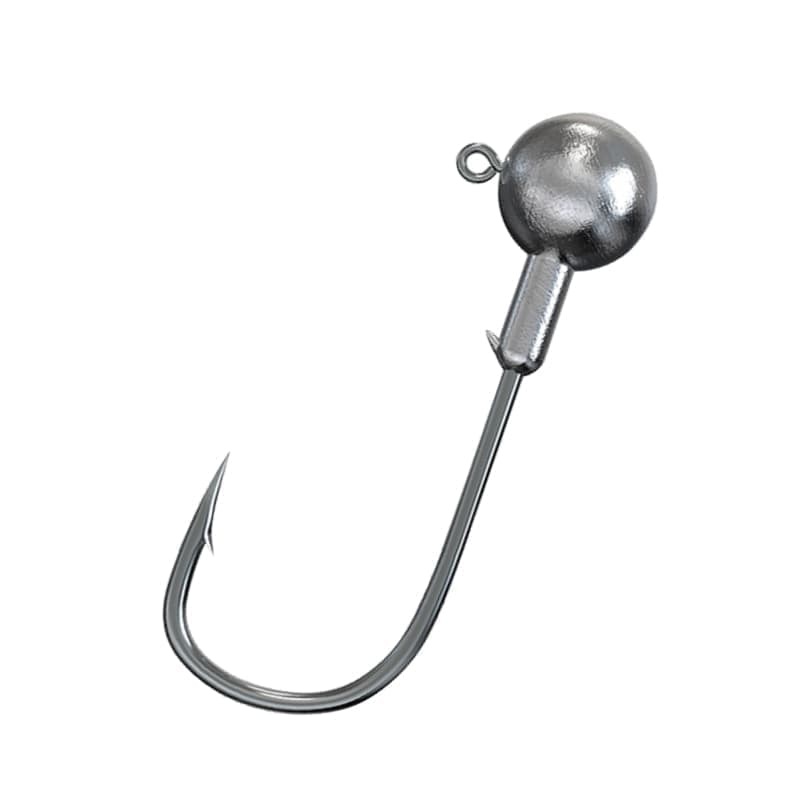 A jig head is a weighted hook. That is the whole idea. It performs four jobs at once:
- Weight — it gets the soft plastic down to the fish and keeps it in contact with structure
- Hook — it provides the point that actually connects with a fish
- Attitude — the position of the eye and the shape of the head set the angle at which the plastic sits and moves through the water
- Wear point — it takes the abuse from rocks and shell that would destroy a bare plastic in minutes
Change any one of those four and you change the presentation. That is why a serious tackle box carries more than one style of head.
The Anatomy of a Jig Head
Head shape
Determines how the bait travels through cover and what happens when it hits bottom. Round, football, darter, bullet, shad and stand-up heads all have a job (covered in the next section).
Hook
Length, thickness of wire, and gap. A wide-gap hook leaves more plastic exposed for a better hookset; a thicker wire holds up to big fish but needs more effort to drive home.
Eye position and angle
A 90-degree eye sits vertically under the nose and makes the bait hang horizontally or nose-down — the usual choice for jig heads. A 60-degree eye pulls the bait to a more horizontal attitude and is preferred for swim jigs and heavier heads.
Keeper
A barb, collar, or screw-lock that holds the plastic in place. On screw-lock heads the bait lasts far longer and stays rigged straight — an important detail for any brand selling jig heads alongside its own soft baits.
Weed guard
A fibre or wire bristle that shields the hook point in cover. It compresses on the strike — but only if the bristles are the right stiffness. Too stiff and you miss fish; too soft and you snag everything.
Head Shapes and What Each One Is For
| Head Shape | Behaviour | Best For |
|---|---|---|
| Round ball | Rolls through cover, classic swimming action | Swimbaits, grubs, general purpose |
| Football | Rocks side to side over hard bottom instead of falling into gaps | Rock, gravel, ledges, current |
| Darter / bullet | Slices through grass and skips under cover | Weed, docks, timber, skipping |
| Shad / swim head | Keeled underside keeps the bait tracking true at speed | Paddle-tail swimbaits, steady retrieves |
| Stand-up | Lands nose-down and holds the bait vertical | Craws, creature baits, finesse work |
| Crank hook head | Wide hook gap paired with a compact weight | Big plastics, heavy cover, Texas-style rigging |
Choosing the Right Weight
The same rule as any weighted lure applies: you need enough weight to feel the bottom, and no more. Light heads fall slower and look more natural; heavy heads stay in contact in wind, current and deep water.
| Weight | Depth / Condition | Notes |
|---|---|---|
| 1–3 g | Shallow, calm, clear | Finesse and pressured fish; slow, natural fall |
| 3–7 g | 1–4 m | The everyday freshwater range |
| 7–12 g | 4–8 m, wind | Keeps contact in a breeze; good for swimbaits |
| 12–20 g | 8 m+, current | Rivers, deep structure, boat fishing |
| 20 g+ | Saltwater, strong current | Heavier wire hooks and corrosion-resistant finishes |
Our GDJH01 jig head series covers 1 g through 20 g in a single head style, which lets an angler or a brand cover the whole freshwater range without changing moulds.
Hook Sizes Explained
Jig head hooks are sized in a scale that runs smaller number = bigger hook up to 1/0, then continues upward: 2/0, 3/0 and so on. Matching hook size to bait length matters more than most anglers expect.
| Hook Size | Typical Bait Length | Target |
|---|---|---|
| 4# – 1# | 2–3 inch | Panfish, trout, finesse bass |
| 1/0 – 3/0 | 3–5 inch | Bass, walleye, the all-round range |
| 4/0 – 6/0 | 5–7 inch | Big swimbaits, pike, saltwater inshore |
| 7/0 – 10/0 | 7 inch+ | Offshore, big soft plastics, heavy tackle |
For a deeper look at hook geometry — wire diameter, point styles, and when to choose a single over a treble — see our complete guide to fishing lure hooks.
Rigging: Exposed vs Weedless
Exposed hook point
Thread the plastic on so the hook point sits in open water. This gives the best hookup ratio of any soft-plastic presentation — the point is already outside the bait, so it only has to travel a few millimetres. The trade-off is snagging, which is why exposed heads belong in open water, over sand, gravel or sparse weed.
Weedless (Texas-style)
Push the hook point through the nose, out the side, then back into the body so the point sits just under the skin. The bait becomes almost snag-proof and can be dragged through heavy cover. You give up some hookup percentage, and you need a firm hookset to pull the point through the plastic — but it opens up water you simply cannot fish with an exposed hook.
Screw-lock and barbed keepers
Screw the nose of the plastic onto the keeper rather than puncturing it. Baits survive far more casts — a real selling point for brand owners who supply jig heads and soft plastics as a matched system.
Five Rigs Worth Knowing
- Jig head + paddle-tail swimbait — the most versatile combination in fresh water. Steady retrieve, occasional pauses. See our swimbait guide for how body shape changes the action.
- Texas rig — bullet weight plus a wide-gap hook, fished through grass and timber. The standard for heavy cover.
- Ned rig — a small, light head with a short, buoyant stick bait. The nose-down stand-up attitude on the bottom is the whole trick.
- Football head + craw — dragged and shaken over rock and gravel. The head rocks over snags instead of jamming into them.
- Jig lure / metal head for saltwater — a weighted head matched to a slim soft body, fished with short, sharp lifts. Fast sinking, and effective on everything from estuary species to reef fish.
Freshwater vs Saltwater Jig Heads
The difference is not cosmetic. Saltwater punishes hardware, and the specification should change with the market you are selling into:
- Material: lead is standard and cost-effective. Tungsten is smaller for the same weight and preferred for finesse and for markets with lead restrictions.
- Coating: powder coat, tin or nickel finishes resist chipping. For saltwater, specify a finish that will not flake after repeated exposure.
- Alternative to lead: zinc alloy heads are increasingly used for markets that restrict lead in fishing tackle.
- Hook wire: heavier wire and stronger points for saltwater species; lighter wire for finesse and for fish with softer mouths.
- Colour program: freshwater tends toward natural baitfish shades; saltwater buyers often want high-visibility or UV finishes. Our custom colour development guide covers how a finish program is built.
Material choice also affects retail positioning. Our comparison of ABS plastic, wood and metal explains why most weighted heads are metal while most hard baits are plastic.
Jig Heads and Jig Lures from GD Angling Tackle
We manufacture both weighted heads and complete jig lures, so a brand can build a matched head-and-body system from one supplier:
Jig heads
- GDJH01 — 1 g to 20 g weight series in one head style
- GDJH02 — hook sizes 4# to 10/0, covering light finesse through offshore
- GDJH03 — six head variants (A–F) in one family
- GDJH04 — a further six variants (A–F) for different cover and currents
- GDJH05 — fourteen variants (A–N), the widest head-style selection in the range
- GD01 crank hook — a wide-gap weighted hook for big plastics and heavy cover
Jig lures
- GDTB01 — 45 mm / 7 g and 50 mm / 14 g
- GDTB02 — 110 mm / 110 g and 142 mm / 112 g, the heavy offshore profile
- GDTB03 — 40 mm / 7 g and 54 mm / 17 g
- GDTB04 — 65 mm / 23 g
- GDTB05 — 43 mm / 13 g
Pair these with our soft bait range or swimbaits to build a complete system, or browse the full jig head catalogue and jig lure catalogue.
Sourcing Checklist for Tackle Brands
Jig heads are a low-unit-price, high-volume item. Small defects become expensive at container scale, so put these points in writing before you place an order:
- Weight tolerance: agree an acceptable gram range per size, and ask how it is verified
- Hook strength: specify wire gauge and point style, not just hook size
- Coating adhesion: ask for a bend or chip test result on the finish you have chosen
- Weed guard stiffness: request samples at each stiffness level and test hooksets yourself
- Packing format: bulk, small bags, or retail blister pack — each changes cost and MOQ
- Sample and MOQ terms: get the sample lead time and the minimum order quantity for each size in writing up front
Our guide to MOQ, pricing and sample policy explains how these terms usually work, and the quality control guide covers what to inspect before shipment. If you are building your own branded range from scratch, start with how to start a private label fishing lure brand.
Quick FAQ
What is the most versatile jig head size?
For most freshwater fishing, a 1/0 to 3/0 hook on a 3–5 g head is the workhorse combination. It handles typical swimbait and grub sizes without being too heavy for shallow water.
Should I choose lead or tungsten?
Tungsten is denser, so the head is smaller for the same weight — useful for finesse and for markets with lead restrictions. Lead remains the cheaper option and is still the default for most volume programs.
Do I need weed guards?
If you fish grass, timber or docks, yes. In open water an exposed hook point converts more strikes. Many anglers carry both and switch depending on the spot.
Can I order jig heads in my own colours and packaging?
Yes. Head colour, hook size, weight range and packaging format can all be specified — that is what the OEM and ODM process is for. See our OEM & ODM page for how it works.
Need Jig Heads in Wholesale Quantities?
GD Angling Tackle supplies jig heads and jig lures in multiple weights, hook sizes and head styles — with custom finishes and private-label packaging.
Contact Us for Wholesale Pricing